
From the wish
Dear Sir or Madam,
We hereby inform you of the additional costs that have arisen. Additional costs are costs that were not included in the original quote. The costs amount to [amount].
We trust that this has informed you sufficiently.
AI workshops for teams
In seconds, AI makes something that is right, or only looks it. Your team learns to give their own briefs, and to see what’s off.
Drawn by: AI
Checked by: you
AI is a fast apprentice who has read everything and has never set foot in your company. You give it a clear brief and you check its work.
AI wrote this email. It has five mistakes. Pick what you wouldn’t send.
0/5 found
Five out of five. Now it can go out. This is what your team does after the workshop, with everything AI makes.
Draft emailAn invented example, deliberately full of mistakes.
Subject: your rush delivery
Dear Sir or Madam,
You asked for delivery on Tuesday. That’s possible. The rush fee is €185 per pallet, so for your three pallets you pay €505.
Under article 12b of the Delivery Act you may cancel free of charge up to 24 hours in advance. What’s more, we guarantee delivery before 08:00.
We look forward to hearing from you.
The difference isn’t in the AI. It’s in what you ask. Give it a wish and you often get the email on the left. Give it a brief and you get something like the one on the right.
Just write a quick email about those extra costs.
Line 07 makes AI say what it assumed. Then you see straight away where to check.
From the wish
Dear Sir or Madam,
We hereby inform you of the additional costs that have arisen. Additional costs are costs that were not included in the original quote. The costs amount to [amount].
We trust that this has informed you sufficiently.
From the brief
Rush delivery on Tuesday: your approval, please
Hi Mark,
You asked for delivery on Tuesday. That wasn’t in the quote, so we’d like your approval first. The rush delivery costs €185 excl. VAT. You’ll then have it on Tuesday before 12:00.
Is that OK? If so, please let me know by email by Friday.
Assumed: the contract says nothing about rush orders.
Not sure: whether Friday is early enough for the driver.
You read it through. The “Not sure” line tells you where to look.
Demo data: we wrote both emails to show the difference.

More than half of the time they work themselves, on their own work.
For work that keeps coming back, made in the AI tool you already have.
A traffic light for what may go in, and six working agreements, for all staff.
A standing assistant runs by itself. You keep the key.
More than half of the time they work themselves, on their own work. The full programme
 Day 1
AI used on their own work, learned to give a brief, their week mapped out and one job chosen to try.
 Day 2
Practised six things you do with AI, the five questions for checking, and the first briefs in the shared folder.
 Day 3
A standing assistant of their own, tested on ten cases, the traffic light and working agreements, champions and a 90-day plan.
Now
A free talk. We see whether it fits and which format you need. If it does, you reserve the dates.
2 to 3 weeks ahead
A half day with the client and two key people, or an hour for the first day. Which work comes back, which tools are there, who handles privacy?
After that
We build your anonymised examples into the exercises. You test the logins.
The days themselves
On site, 09:00 to 16:30, consecutive or spread out. Short demos, then hands-on with their own work.
Within a week
The agreements for everyone, the certificates digitally, and a report: which assistants exist, who the champions are, what’s still open.
After 30 and 90 days
Everyone shows what their assistant does now. Then we choose the next step: more people, a second assistant or a real automation.
Excl. VAT, for up to 12 participants.
The programme was first written for a construction company. In the intake we replace the examples with ones from your sector.
All four are reasonable, and they come up in every group. A sceptic who finds a mistake is a gift: that’s when we show how to steer.
Thought: AI isn’t for our kind of work.
Revised: A lot of time leaks away between the shop floor and the office: retyping, searching, chasing.
Thought: AI makes mistakes, so it’s useless.
Revised: An apprentice makes mistakes too. That’s why you check.
Thought: I first need to understand how it works.
Revised: You learn it by doing it: fifteen minutes a day.
Thought: AI will take our jobs.
Revised: Some work will go, that’s the honest answer. The question is who chooses which. Here, you do.
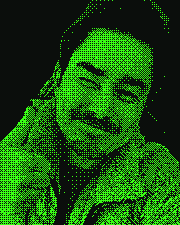
Laurens van Riel builds AI workflows at Van Riel Online Services in Rotterdam that run every day: texts in a company’s tone of voice, purchase invoices held against the price list, a phone line that answers in Dutch. He gives the workshops himself.
Why a media studio? Images are our craft, and automation is one of our services. Once you’ve learned to look properly, you also see when something isn’t quite right.
This isn’t demo data. These workflows run at our company, at fixed times, and a person keeps the last word.
An introductory talk is free. Together we look at which work keeps coming back, which AI tools you have and which format fits.
Book a free introduction